

Helium Leak Detection – Hydrogen Leak Detection High
Helium leak detectors and hydrogen leak detectors use a helium or hydrogen mixture as a tracer gas. Why two different gases? We explain the when and the why for each.
When testing vacuum systems or a sealed product for leaks, one important factor is if the leak is outside/in or inside/out. Imagine a vessel under vacuum inside like a vacuum chamber and the leak causing the integrity of the vessel would be air leaking in. This is an outside/in leak. In this instance, helium is the only really good tracer gas available to find small leaks. Helium is the gas of choice due to low helium background in air, lack of other sources that could outgas helium and the ability to accurately detect the leak due to no overlapping peaks when using a helium mass spectrometer. Hydrogen is not a good choice due to find very small leaks only a 5% hydrogen/ 95% nitrogen mixture can be used. Other factors hampering hydrogen in an outside/in leak is the outgassing of hydrogen with stainless steel and the fact that vacuum pumps cannot pump hydrogen out of the sealed vessel or chamber to adequately lower the background of hydrogen in the vessel or chamber.
When leak checking a product that is under pressure like a refrigeration system, either helium or the 5% Hydrogen/95% nitrogen mixture can be used. Up until the 2000's helium was the choice for this inside/out leak using a helium mass spectrometer. Once hydrogen leak detectors became as sensitive as helium leak detectors in the "sniffing" mode, the 5% hydrogen/05% nitrogen became a more economical choice of tracer gas due to the cost of the helium vs the 5% hydrogen/95% nitrogen (5/95) and the less maintenance intensive solid state design of the hydrogen leak detectors. This design of hydrogen leak detectors is less costly than the maintenance of the helium mass spec. So in most instances, we recommend hydrogen leak detectors for sniffing applications or applications where the leak is inside/out. Examples of sniffing applications would be refrigeration and air conditioning systems,fuel lines, EV batteries, condensers and heat exchangers.
Apex Vacuum is your supplier that understands both applications and can assist you in leak detection of your system or product. At Apex Vacuum technical support is abundant and free.
Subsurface or Underground Pipe Leak Detection
Locating the leak location of an underground pipe associated with water mains and swimming pools used to be an application for mainly ultrasonic type leak detectors. Ultrasonic leak detectors use sound waves to detect water escaping the pipe. In high noise areas or PVC pipe applications the ultrasonic leak detectors are unable to pinpoint the leak location. Using hydrogen leak detectors and H2 tracer gas (5% hydrogen/95%nitrogen to stay under the lower explosive limit of hydrogen), the hydrogen gas escapes the leak and moves directly up from the leak efficiently moving through dirt, asphalt and even concrete to escape into atmosphere. Using a hydrogen leak detector, the leak tech can walk the line and identify where hydrogen is escaping the ground indicating the leak location usually within a less than 3 ft radius.
Helium tracers has been used for this application but is no longer favored due to the high cost of the helium tracer gas and the higher maintenance cost of helium leak detectors.
Apex Vacuum is pleased to be the leader in supplying low cost hydrogen leak detectors for this underground piping application.
Helium Leak Detectors
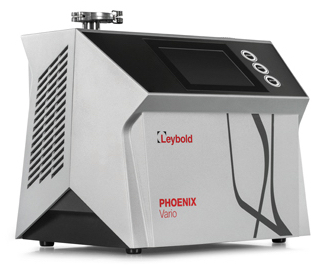
The Leybold Quadro and Vario Helium Leak Detector is a compact, robust leak detection solution designed for fast, reliable leak testing for vacuum chambers and sealed products.. Combining advanced mass spectrometer technology with a rugged, portable design,
Optimized forvacuum leak testing, the Quadro and Vario provides excellent sensitivity, rapid response times, and easy operation—making it ideal for high-throughput industrial applications.Leak rates to ≤ 5 · 10-12 mbar liters/second can be detected with the Quadro and Vario
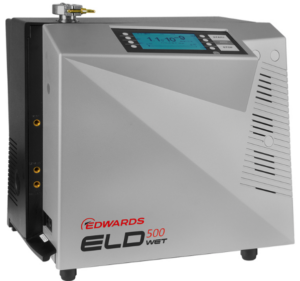
The Edwards ELD500 helium leak detector is a rugged, easy-to-use leak detection solution designed for fast and reliable leak testing in demanding industrial, HVAC, and production-line environments. Built on Edwards’ proven leak detection technology, the ELD500 delivers consistent sensitivity, rapid response times, and dependable performance for both sniffer and vacuum-based leak testing.
With its compact footprint and durable construction, the ELD500 is ideal for shop-floor use, service operations, and quality assurance testing where speed, accuracy, and reliability are critical.

TG Expert is a handheld leak detector to detect helium and argon leaks Leak sensitivity of the TG Expert to find leaks is Helium 1 10-5 cc/s and Argon 5 10-5 cc/s. Detection is with a measuring cell with unsaturable thermal conductivity. TG Expert has rechargeable batteries that last 6-8 hours of operation with a 12 hr recharge time. Unit has 3 user selected levels of detection, low, medium and high sensitivity.. Detection is progressive light ramp indicating the estimate of the leak value with sound signal.
Hydrogen Leak Detectors-Underground Pipe

The H2Leak-Underground (PN#DXH-240-U) Underground Hydrogen Leak Detector is a high-sensitivity instrument designed for locating hydrogen leaks in buried pipelines and subsurface gas distribution systems. Engineered for field reliability and precision, the DXH-240-U enables fast, accurate detection of hydrogen before homeowners and businesses incur large water bills. Tracer gas used is a totally safe 5% Hydrogen/95% Nitrogen mixture that is inexpensive and is green label non-combustible as it is below the lower explosive limit for hydrogen flammability.
The H2Leak-Underground has a 4 level sensitivity switch to allow users to better pinpoint the leak location. The hydrogen sensor and flex line are field replaceable for maximized uptime.

Hydro-Lok is our original underground leak detector. The Hydro-Lok uses the TLD.500 Hydrogen Leak Detector as the hydrogen sensing unit. The Hydro-Lok is now more of our slightly lower cost unit that allows users to get started in hydrogen tracer gas method of leak detection before moving up to the H2-Underground unit that has more features and has a field replaceable sensor and flexible line.
Hydrogen Leak Detectors- Service & Small Scale Production Applications
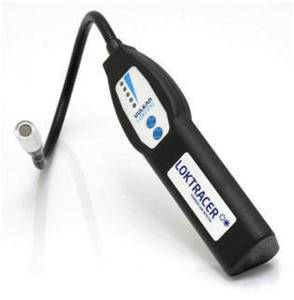
The TLD.500 Hydrogen Leak Detector is a precision instrument designed to quickly and accurately detect hydrogen leaks in air conditioning systems, refrigeration systems, heat exchangers, condensers and other critical applications where leak integrity is paramount. With fast response, high sensitivity, and reliable performance, the TLD.500 helps prevent refrigerant leaks, protect equipment, and maintain operational integrity.